
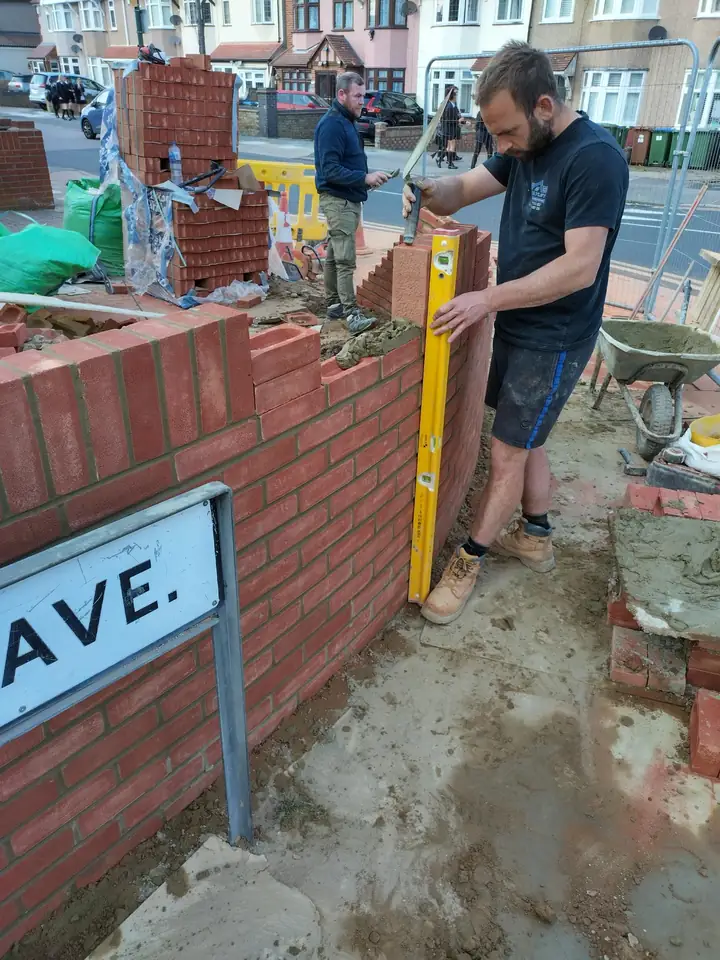
The cost of brickwork depends on how much there is, how high it goes, what it stands on, which brick is used and how easy the site is to work on. A straight, low garden wall in a common brick on open ground is at one end of the scale. A tall wall on a sloping site in a reclaimed brick to match a period house is at the other. Here is what bricklayers look at when they price a job, so you know what to expect and what to ask.
The main things that affect the price
Size and height
The amount of brickwork is the starting point, but height matters as much as length. Higher walls need scaffolding or staging, take longer per course and often need to be thicker, with piers or a stronger bond.
Footings and ground work
Every new wall needs a concrete footing down to firm ground. Clay soil, nearby trees, soft ground or a slope all mean digging deeper or wider. Breaking out an old footing, or digging by hand where a machine cannot reach, adds time. This is the hidden part of a garden wall, and the part that decides whether it stays straight.
Brick choice and matching
Modern facing bricks vary in price, and handmade or reclaimed bricks cost more again. Matching an existing wall can mean sourcing a particular colour and texture, or older imperial sized bricks, which can take time to find. A good match is what makes a repair or an extension look like it was always there.
Bond and detail
Stretcher bond is the quickest to lay. English and Flemish bonds, curved walls, piers, arches, soldier courses and decorative copings all take longer. Our guide to brick bonds explains the differences.
Access
Can materials be delivered close to the work? Can a mixer and a skip go nearby? If everything has to be barrowed through a house or down a narrow side passage, the job takes longer.
Waste and making good
Old brickwork, spoil and packaging all need taking away. Repairs also involve cutting out, cleaning up and making good around the area.
How the factors play out on common jobs
Garden walls
Length, height, the footing, piers and copings, and the brick. A front wall with gate piers takes more time than its length suggests. See our garden walls page.
Brickwork repairs
How many bricks need replacing, how hard they are to match, whether the cause needs fixing first, such as a failed lintel or tree roots, and whether access equipment is needed. See our brickwork repairs page.
Repointing
The area of wall, the depth and hardness of the old mortar, the type of mortar needed and access. Our repointing cost guide goes into this in more detail.
Extension brickwork
The size of the shell, the openings for windows and doors, the brick matching to the house and how the build is programmed with the other trades.
How to get an accurate quote
- Send photos. Wide shots and close ups of the brick help us understand the job before we visit.
- Give rough sizes. Length and height of a wall, or the area of a repair.
- Mention access. Side passages, parking and anything that could slow deliveries.
- Say what you want to match. The house, an existing wall or a neighbour’s.
Weather and timing
Mortar needs to cure without freezing, so in cold spells new brickwork is covered and protected, and on frosty days bricklaying stops altogether. That can stretch a winter job over more days. It rarely changes the work itself, but it is worth planning a garden wall or a repair with the weather in mind, and agreeing a realistic start date when you accept the quote.
Comparing bricklaying quotes
Check that each quote includes the footing, the brick type, copings or caps, movement joints for long walls, waste removal and making good. A low price that leaves out the footing is not a saving.
RS Kayley Ltd prices every job after a free visit, with a written quote that sets out exactly what is included. We are bricklayers based in Bexleyheath with over 18 years on the tools, working across Dartford, Crayford and the surrounding areas. Ask for a free written quote.